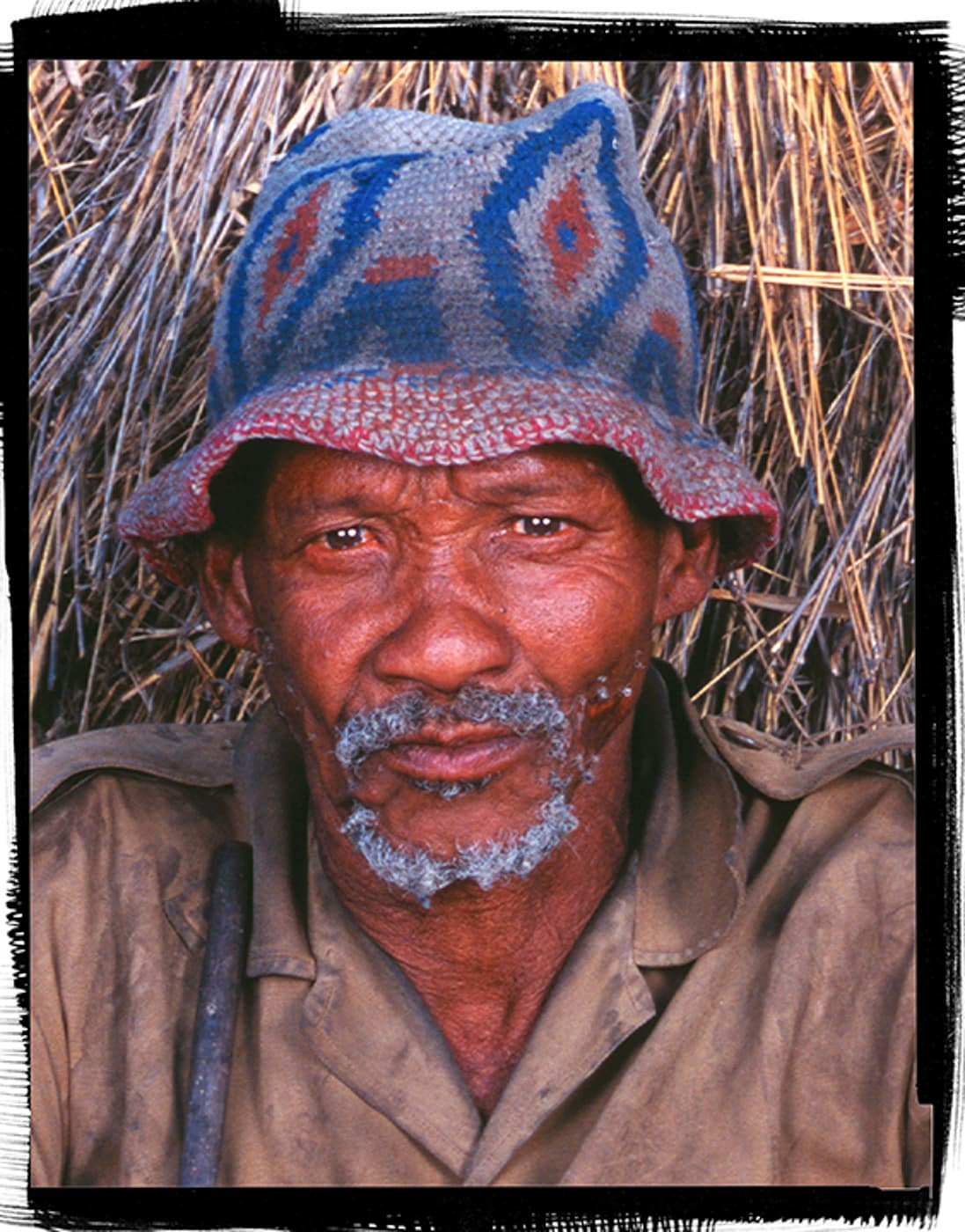
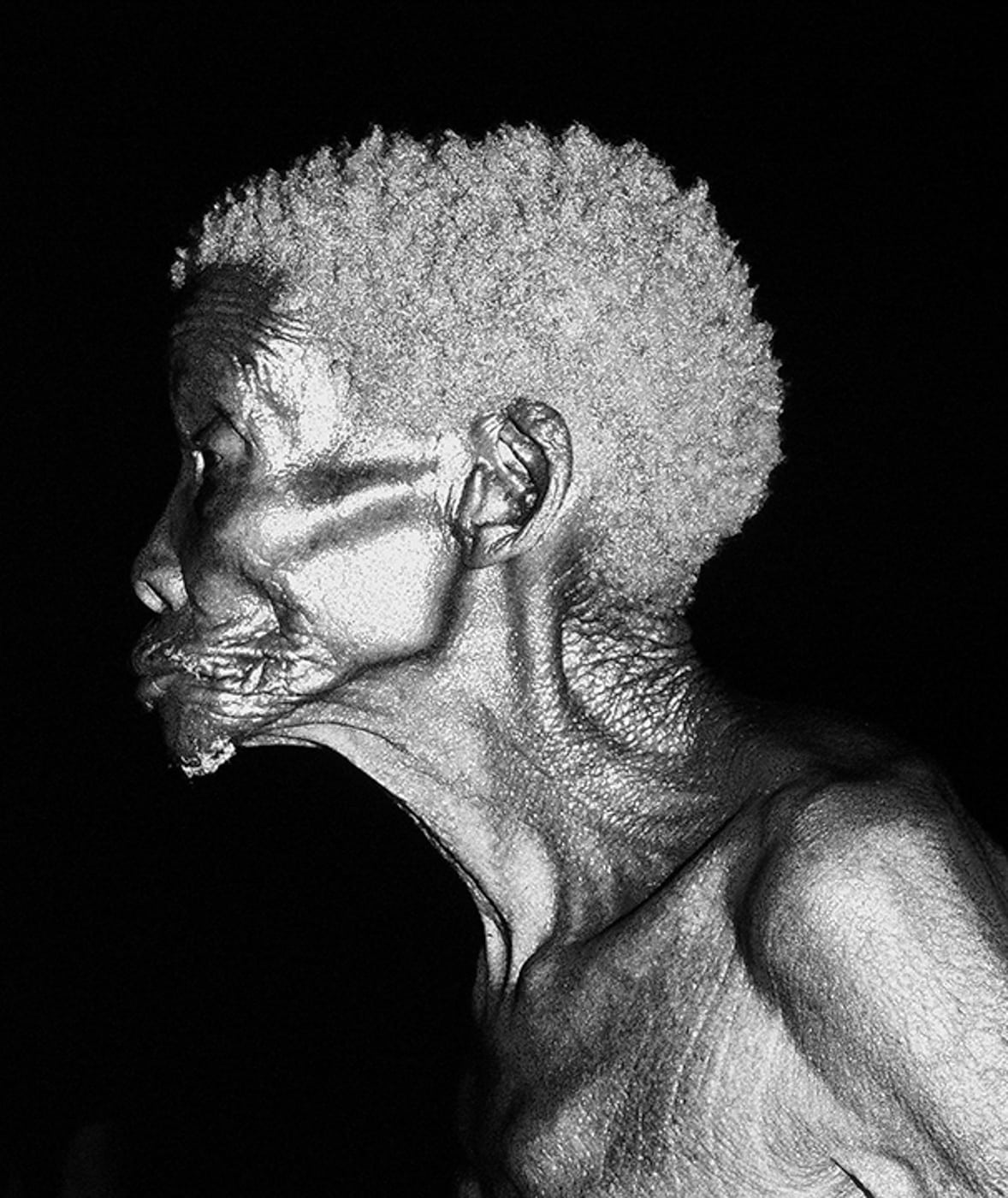
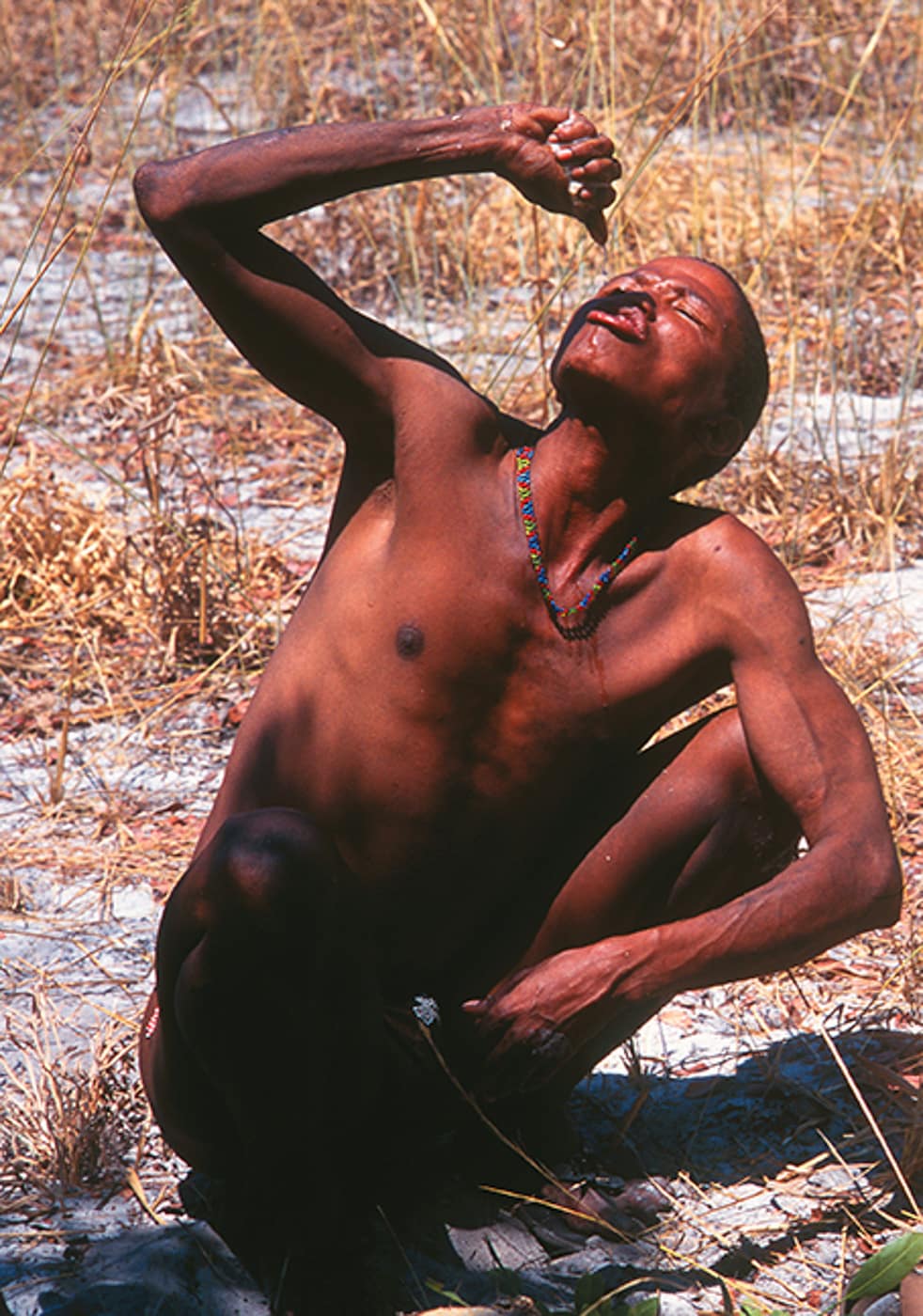
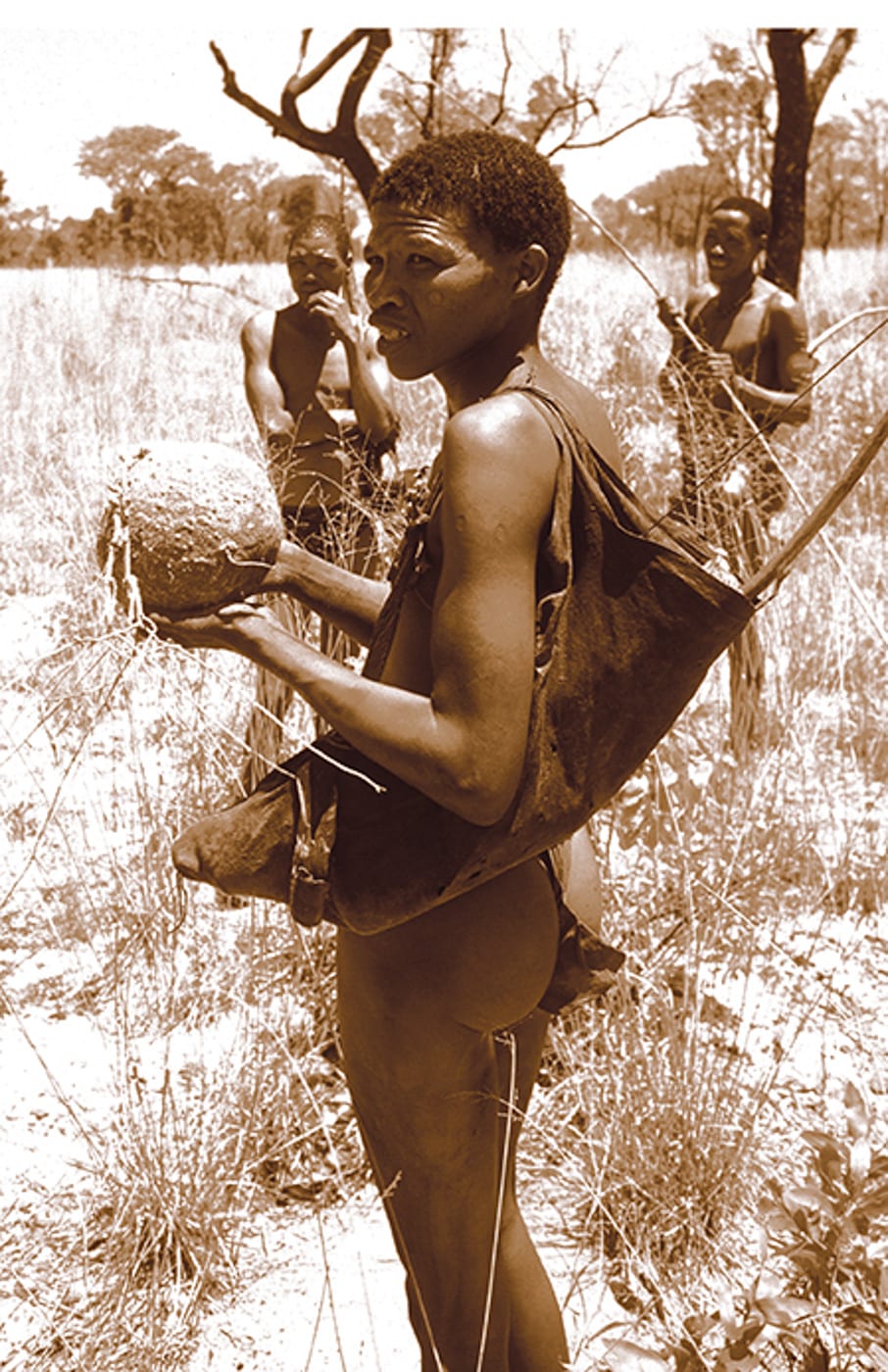
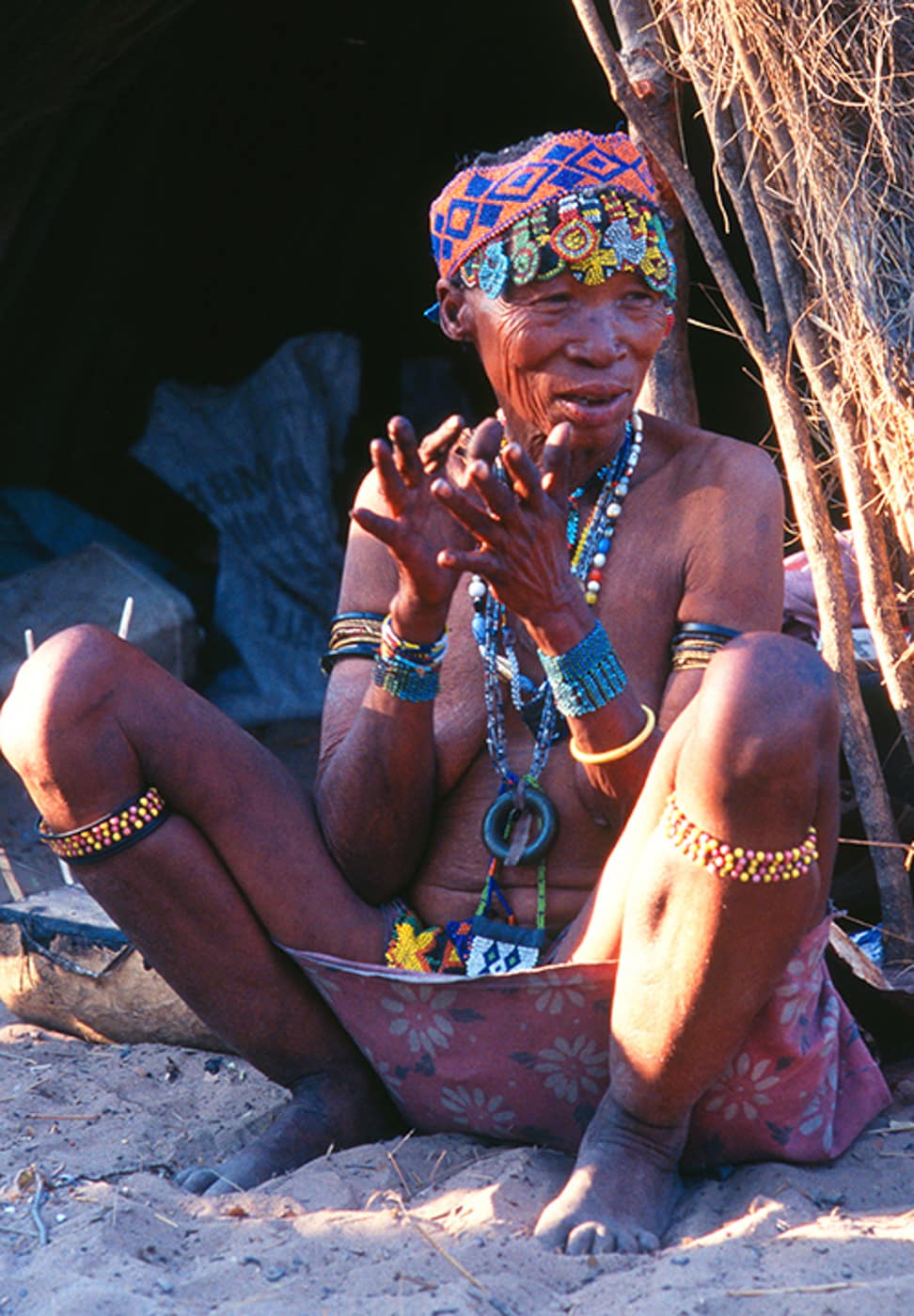
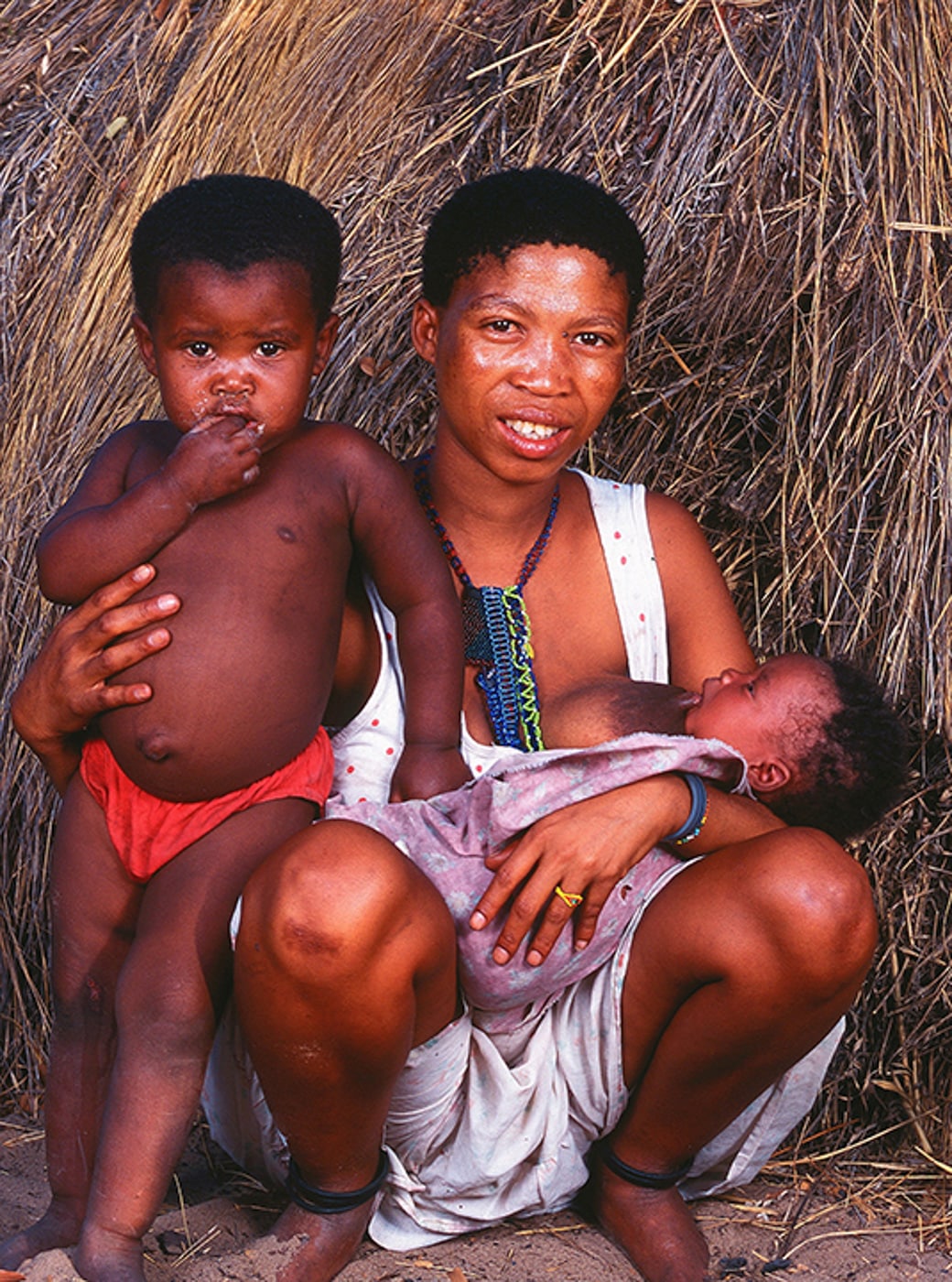
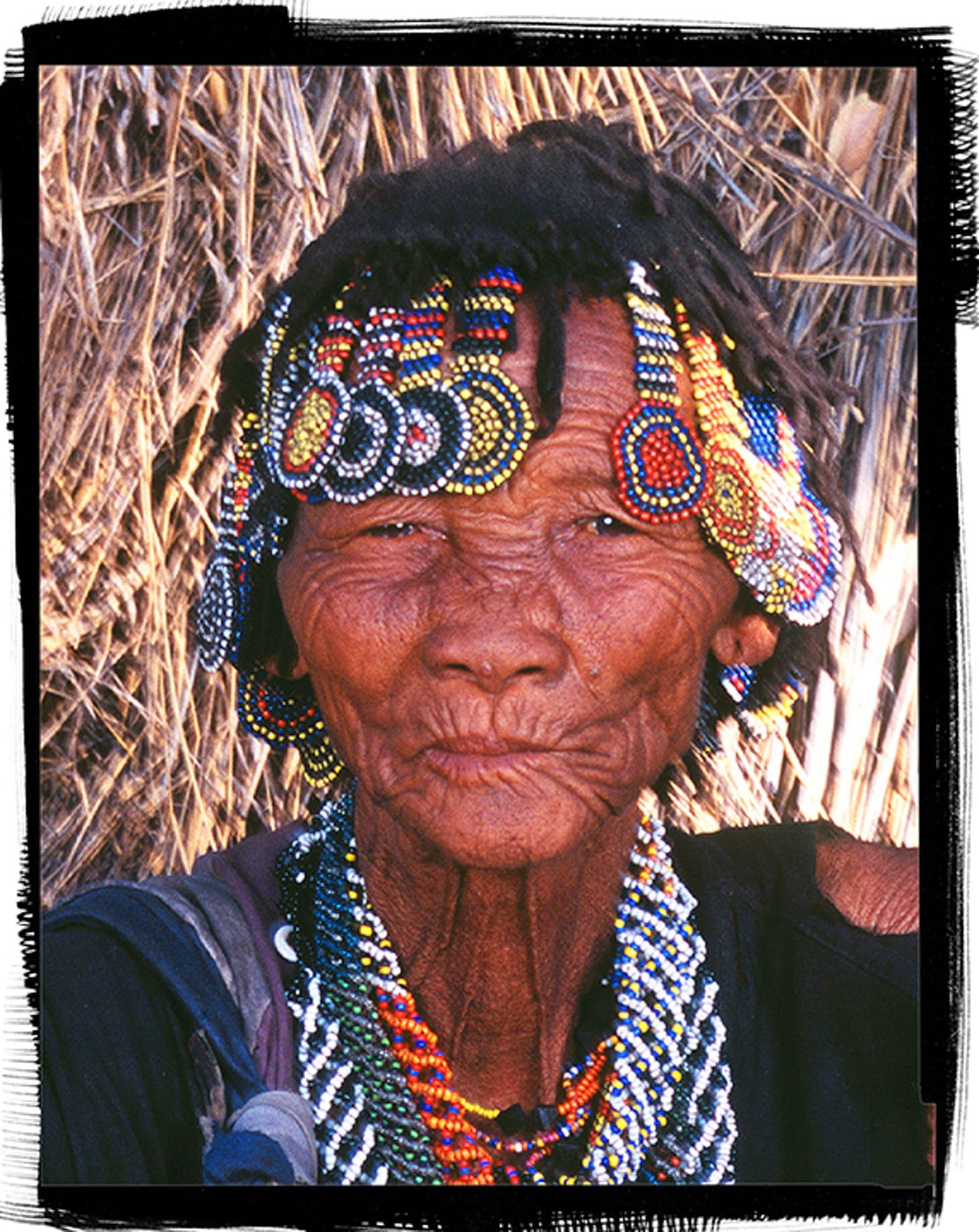
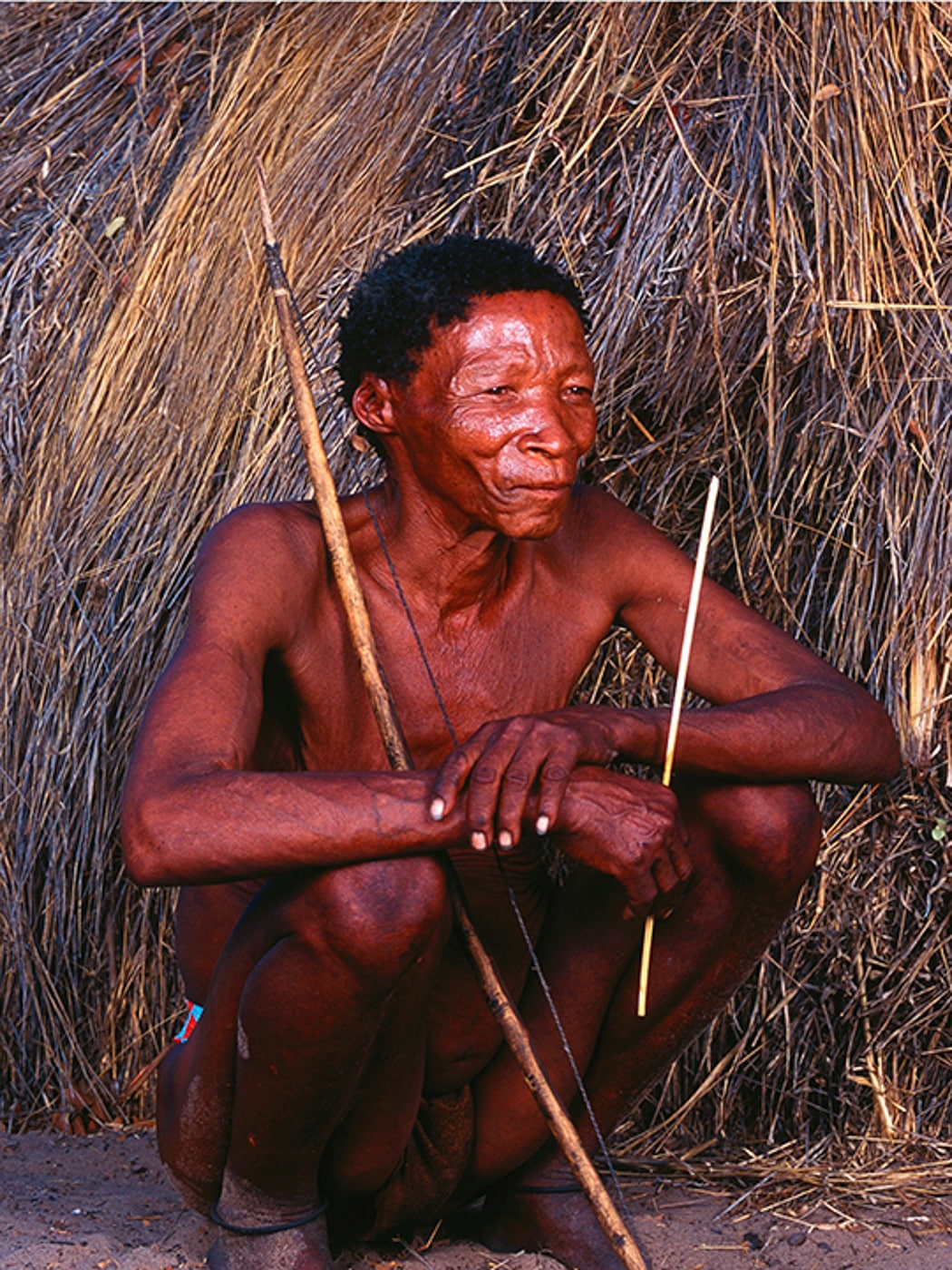
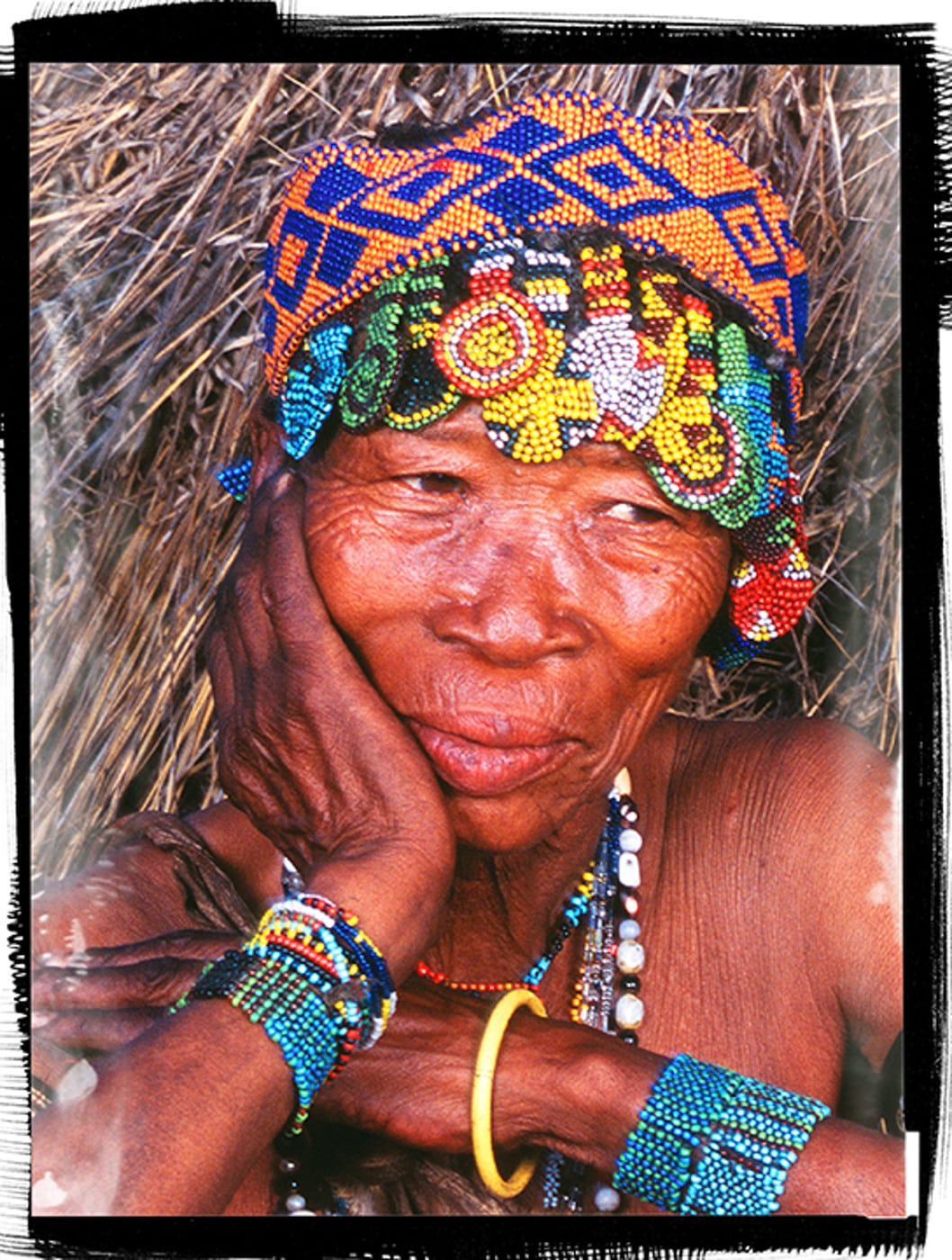
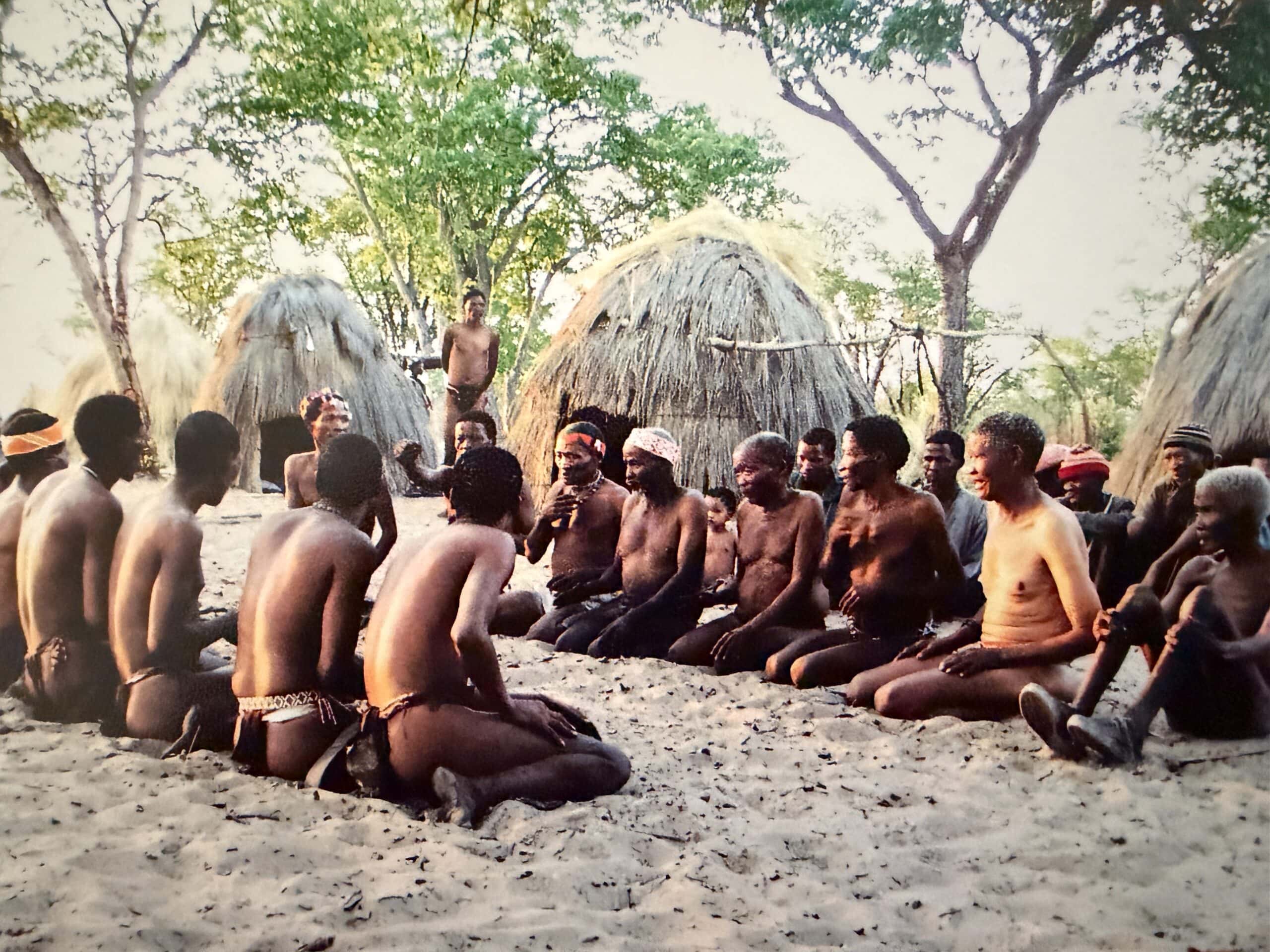
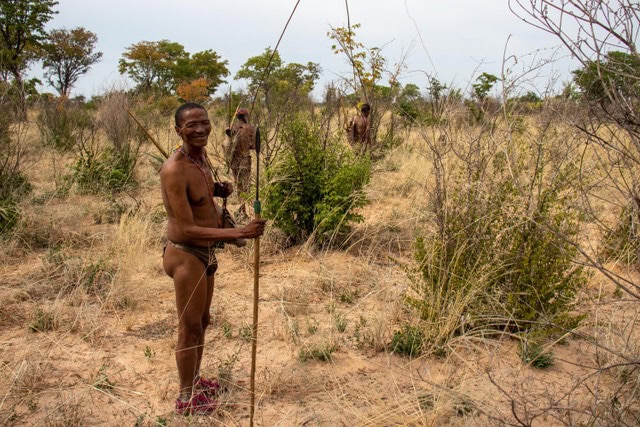
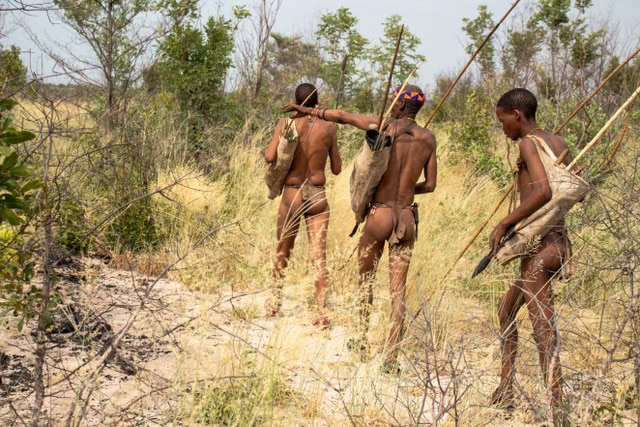
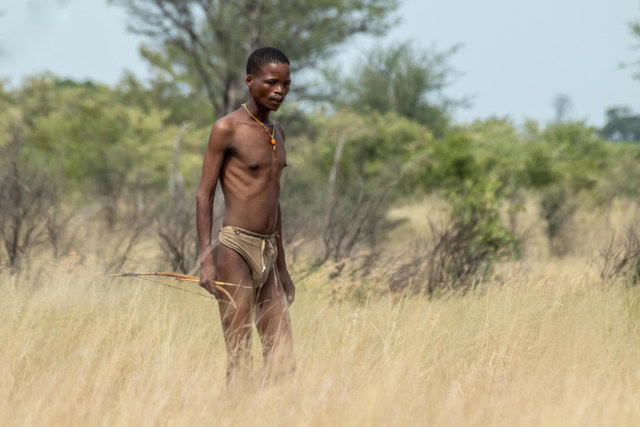
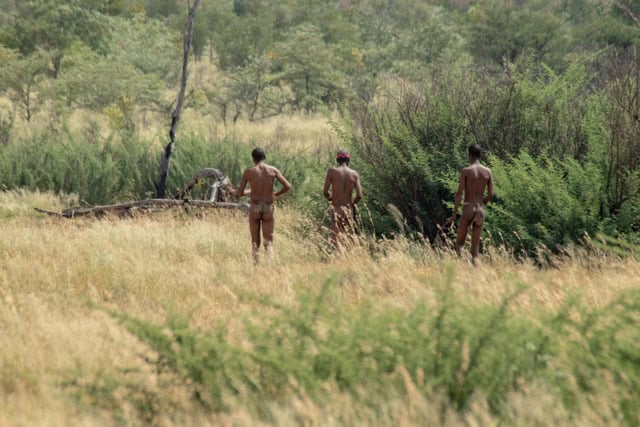
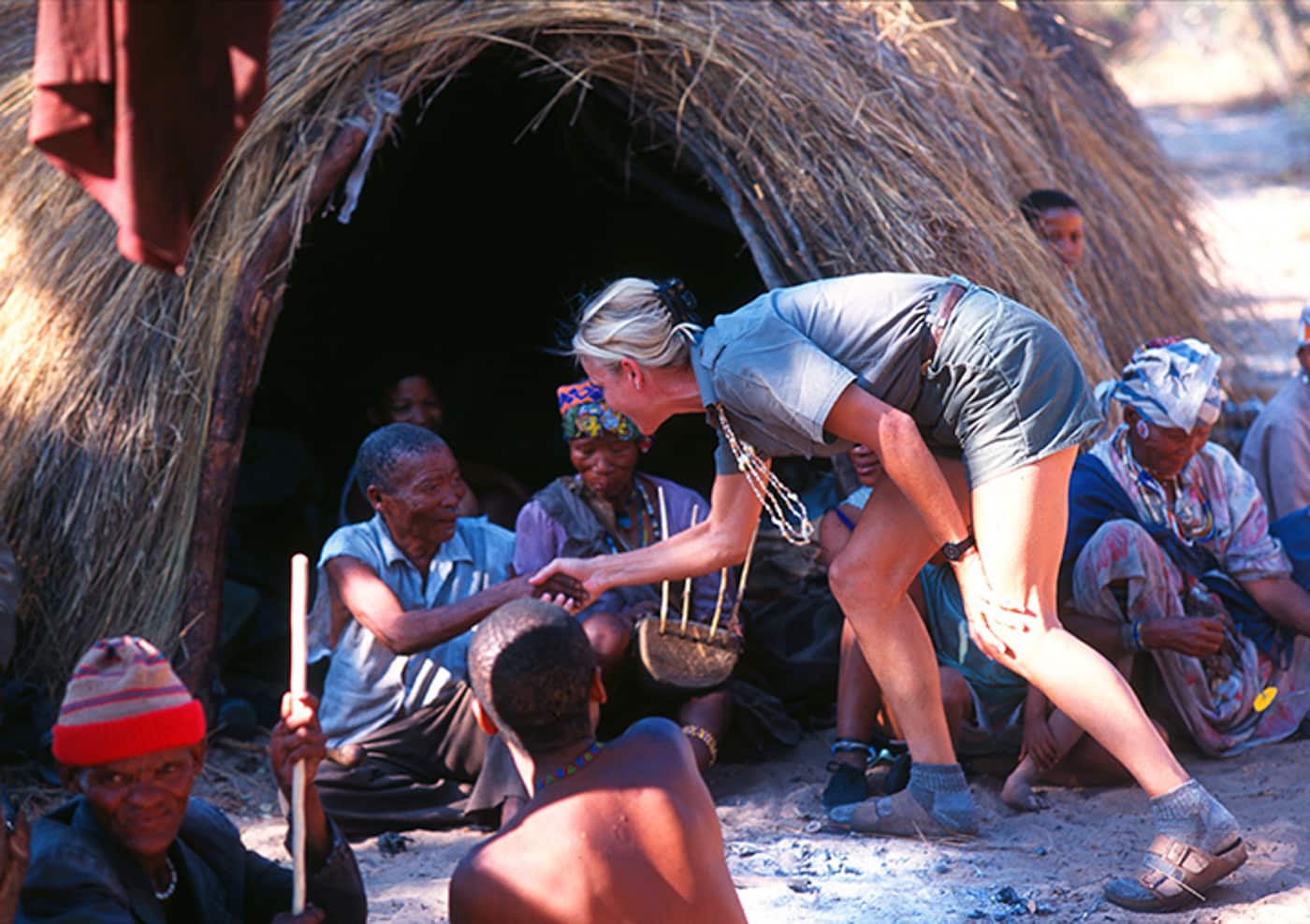
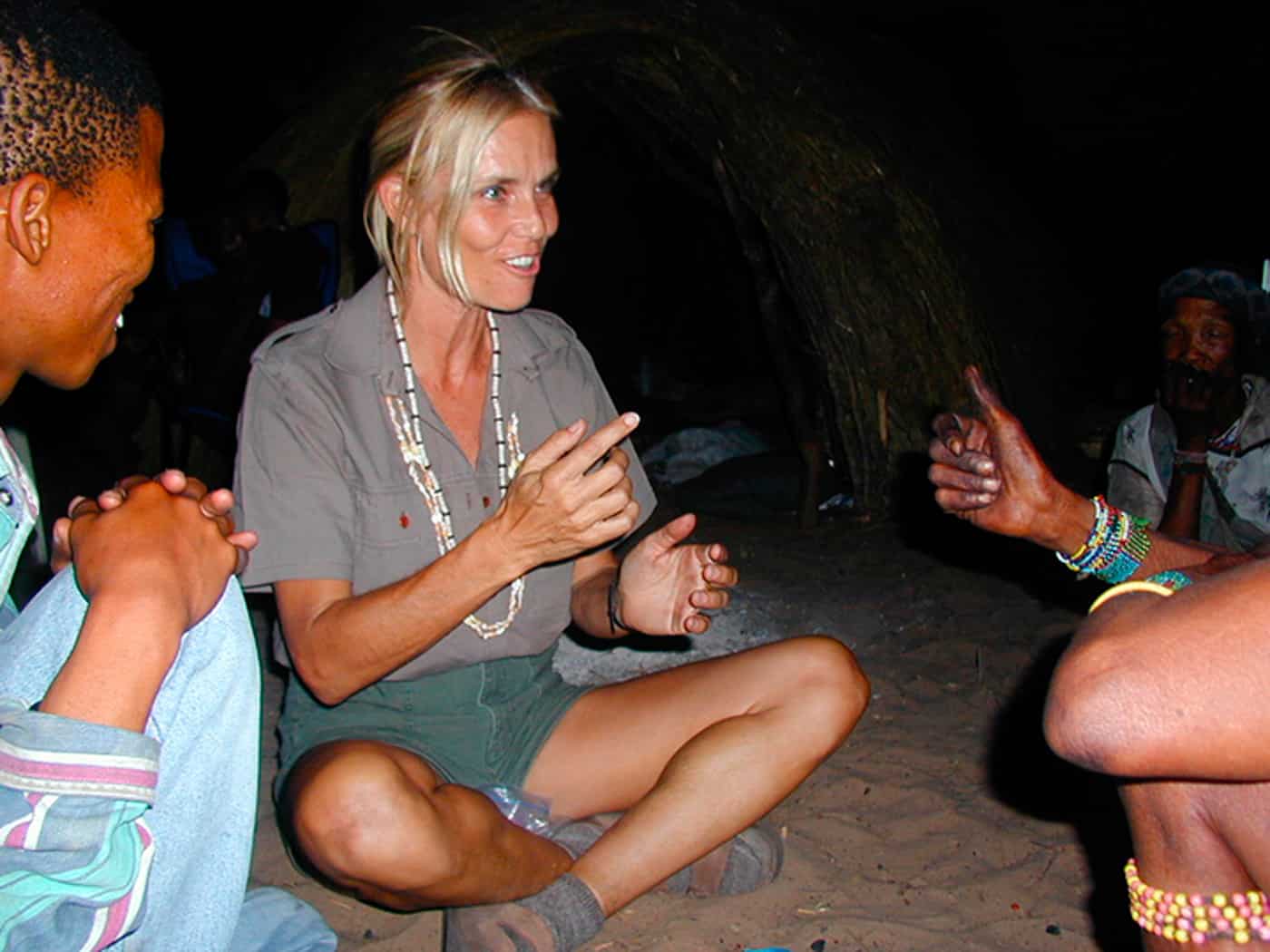
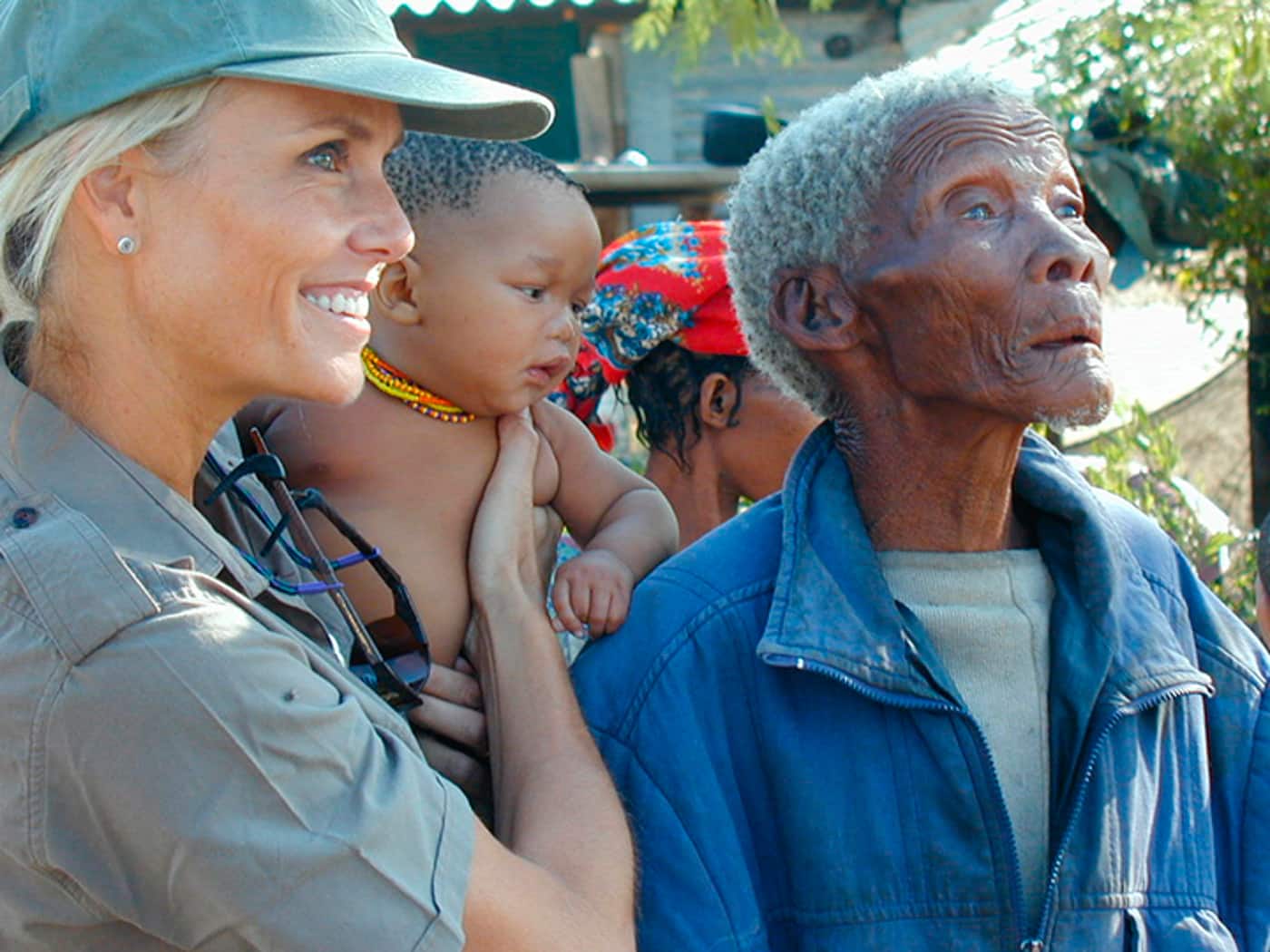
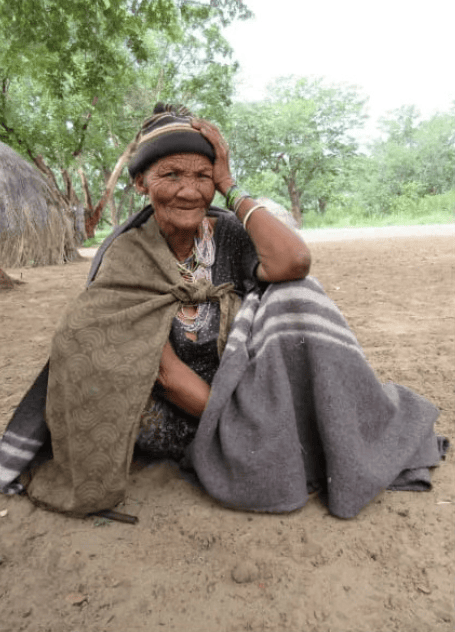
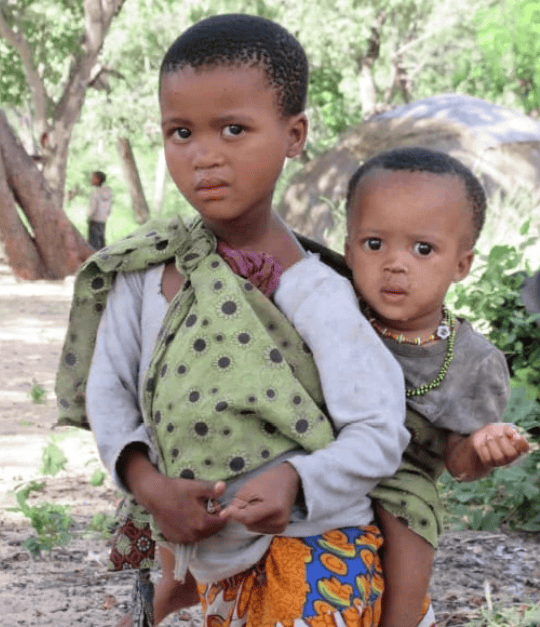
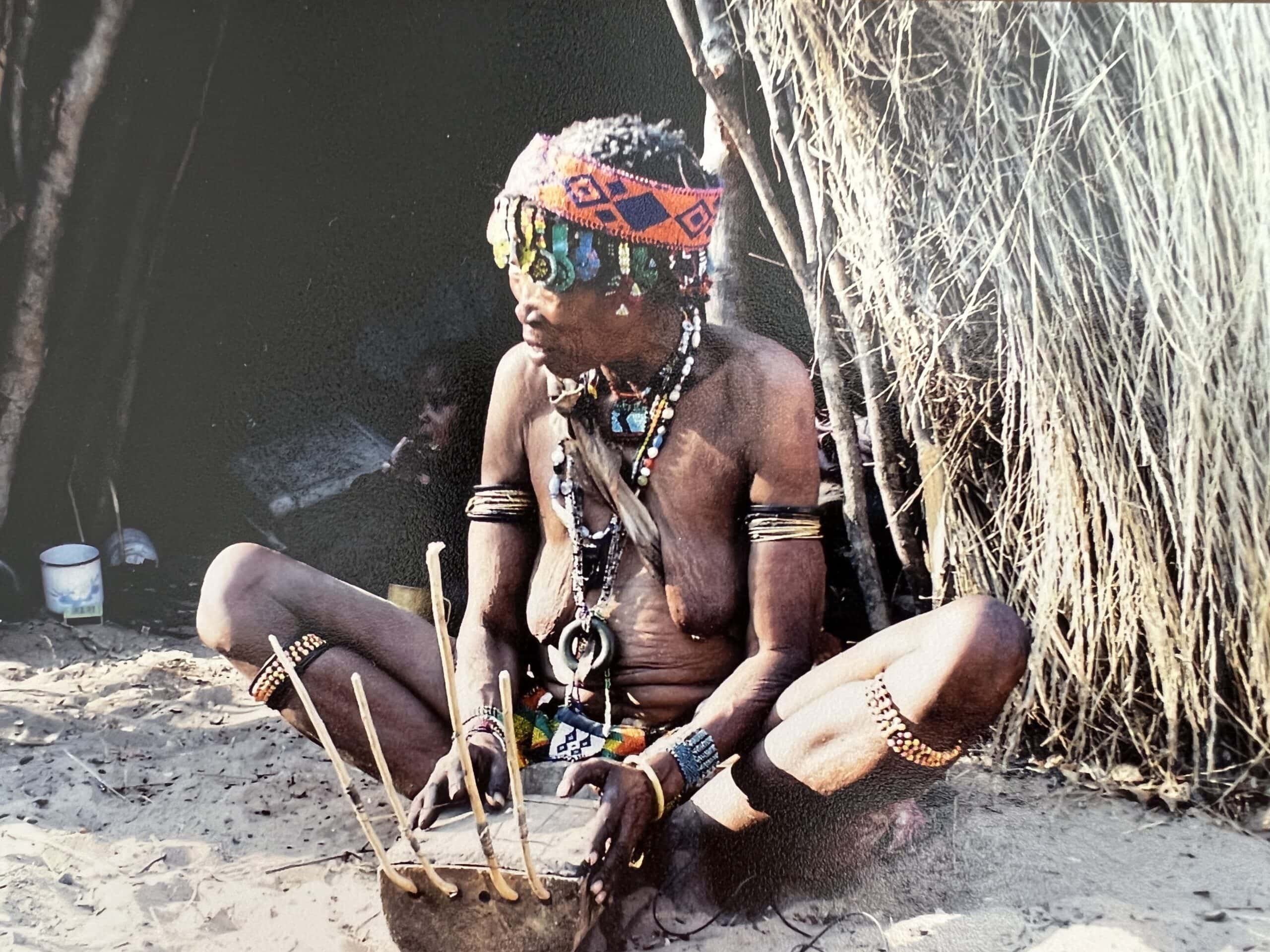
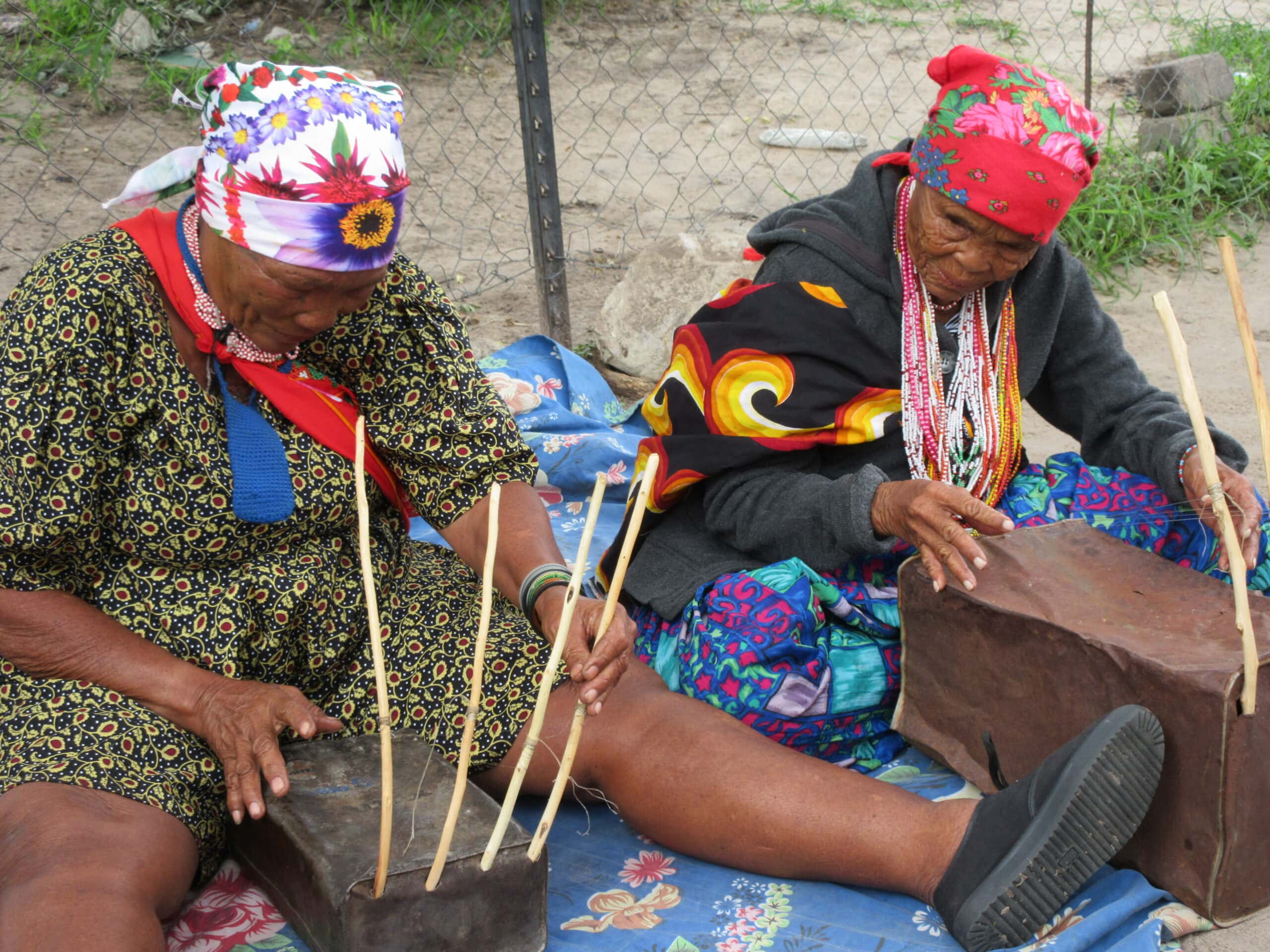
Our relationship with the Ju/’hoan San began with Barbara Savage’s first journey to Africa in 1998 — and with a request. In 2000, the chief, G/a’qo Kaeqce, asked TTF to document his people’s cultural traditions so they could be passed on to future generations and awareness raised of their existence and importance so as to avoid genocide, which the Chief was concerned about before the UN intervened. Our film crew documented sacred songs, dances, and traditions to help facilitate a male initiation ceremony, including three dances never before seen by Western eyes, and a professional photographer photographed each member of the tribe, babies and elders alike (TTF, The Ju/’hoansi San).
The tribe reported the success of the male initiation ceremony — and how it rekindled interest among San youth in learning the ways of their Elders.
Why we partnered
As San activist and Medicine Man Roy Sesana reminded us, “We are the ancestors of our grandchildren.” (TTF, The San of Namibia in Santa Barbara) For more than two decades, every project with the San has grown from what the community has asked of us.
Our collaborative impact
Placed our unedited documentation in trust to the San at the Smithsonian’s National Museum of African Art and the Namibia Museum. The Smithsonian’s Human Studies Film Archive later accepted all of our footage and photographs into its permanent collection.
Partnered with Springbok Films to produce the award-winning documentary Vanishing Cultures: Bushmen of the Kalahari, bringing international awareness to the San’s plight.
Supported bringing San human rights activists to the United States, where they were honored at a TTF event in Santa Barbara.
In 2021, funded, helped organize, and documented a Ju/’hoansi healing trance dance gathering to pass on this knowledge to future generations.
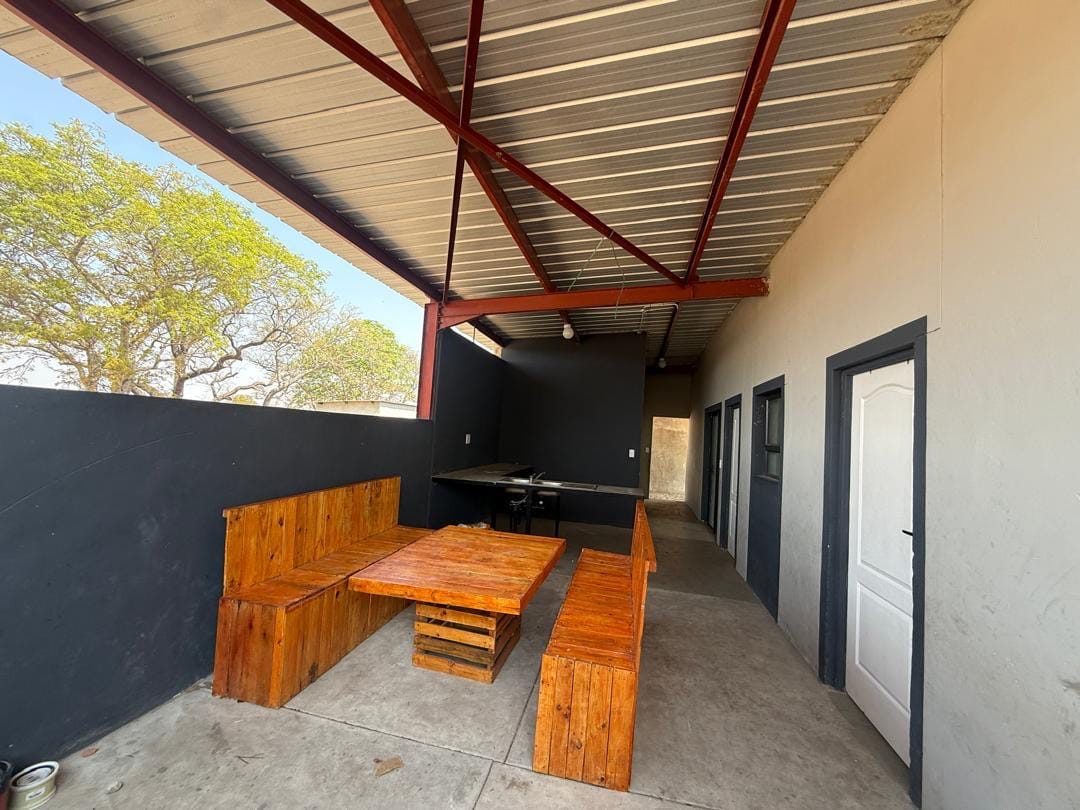
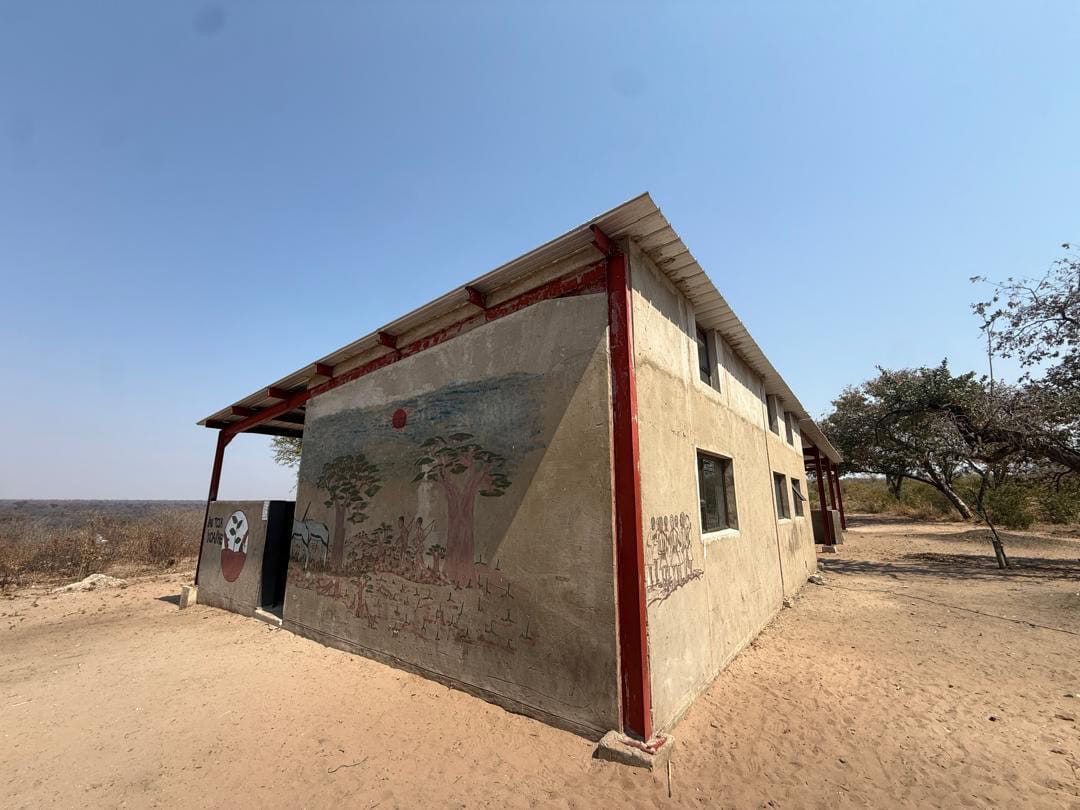
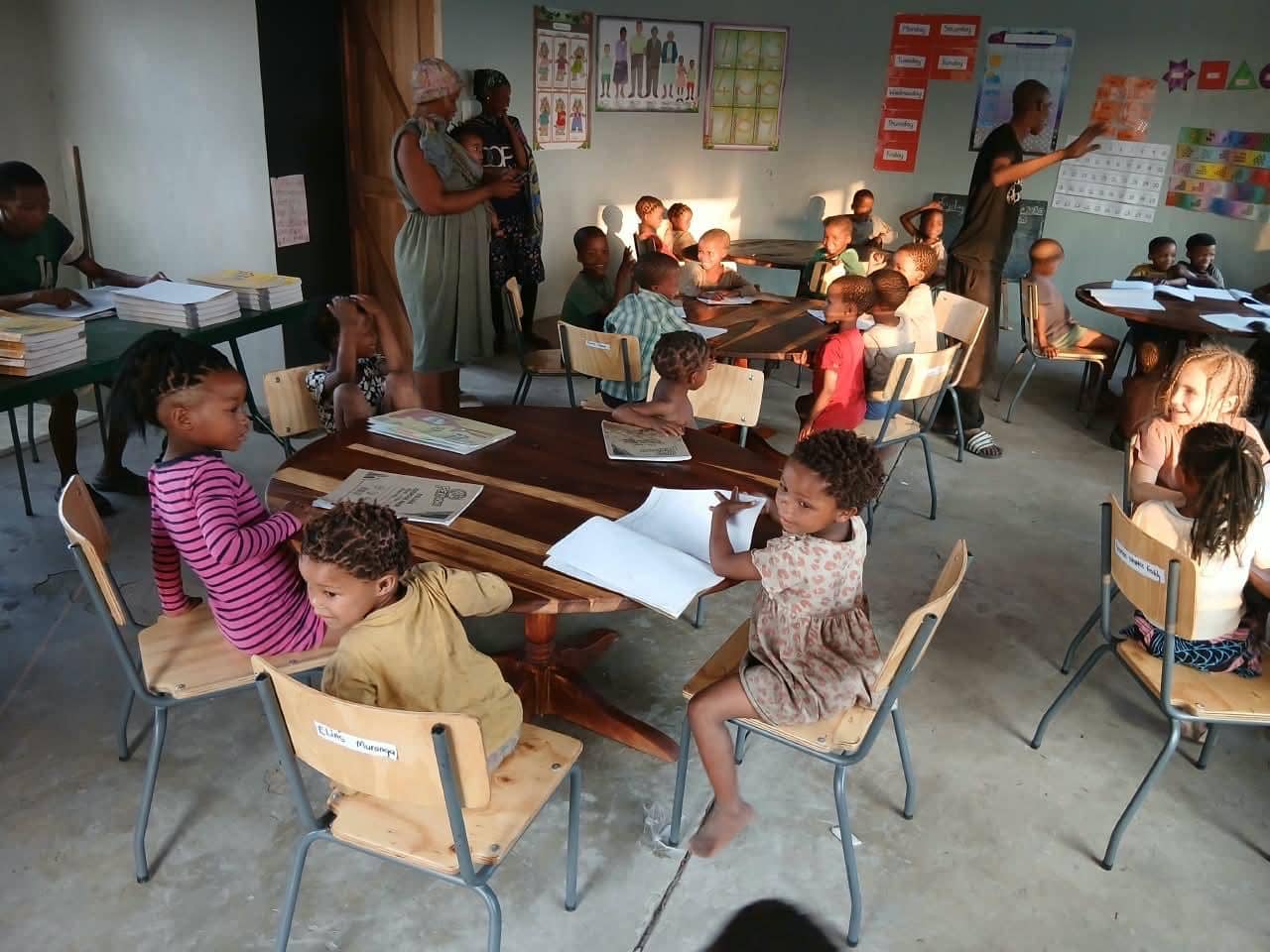
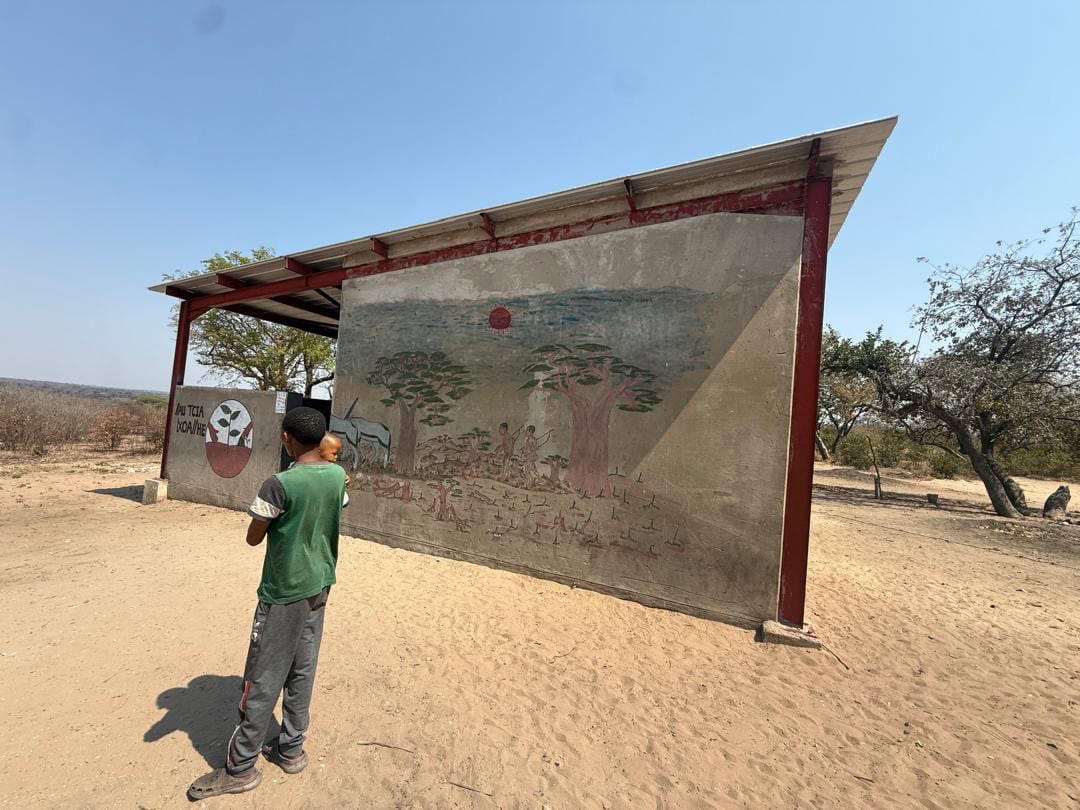
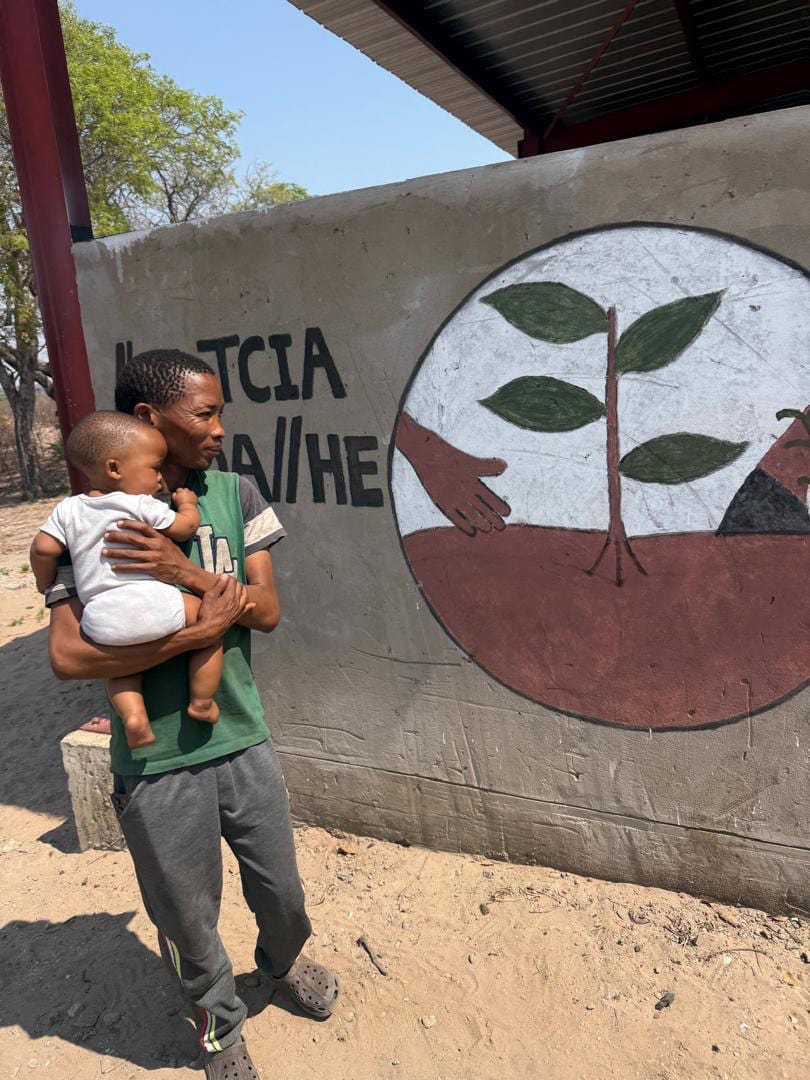
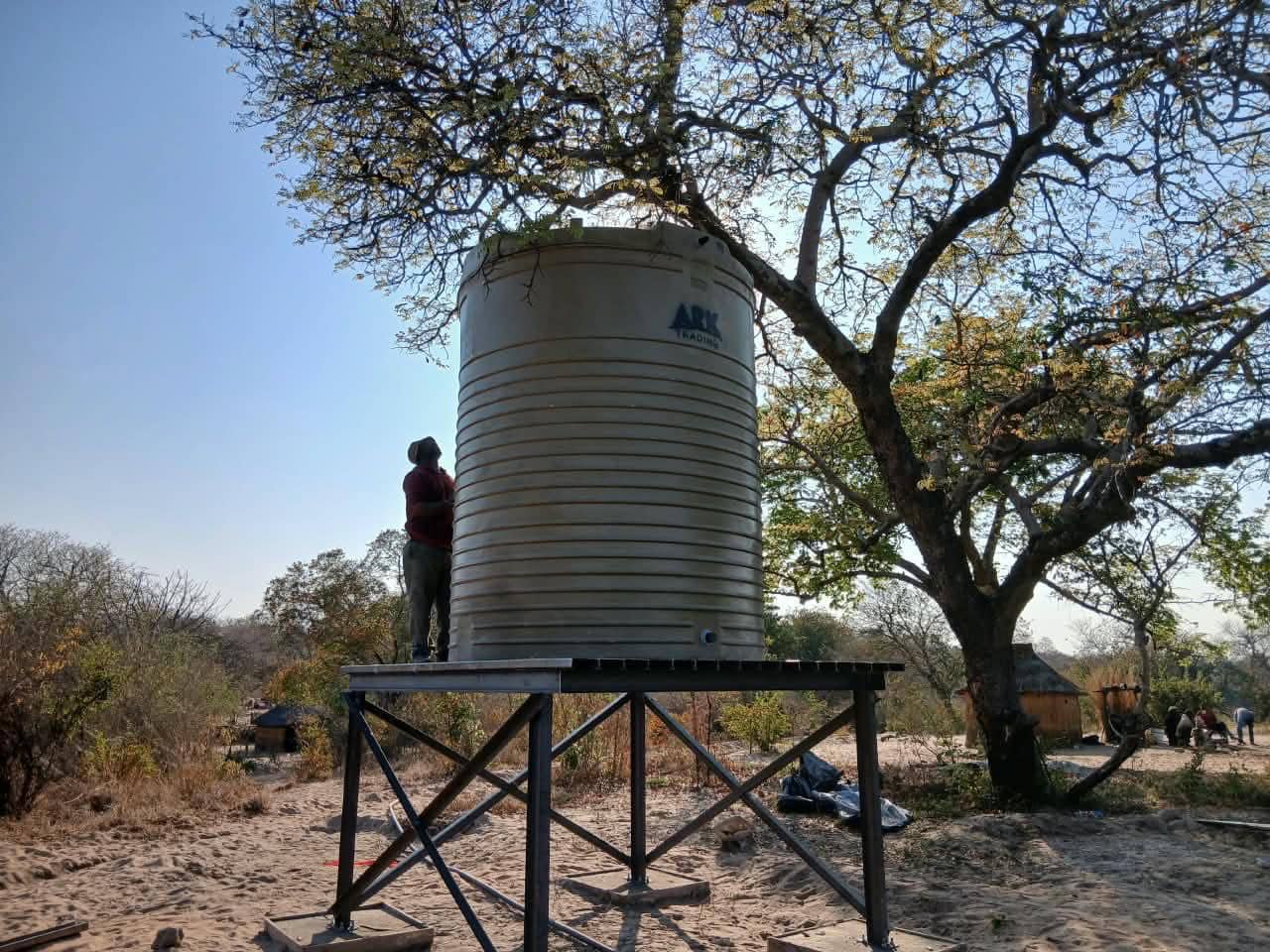
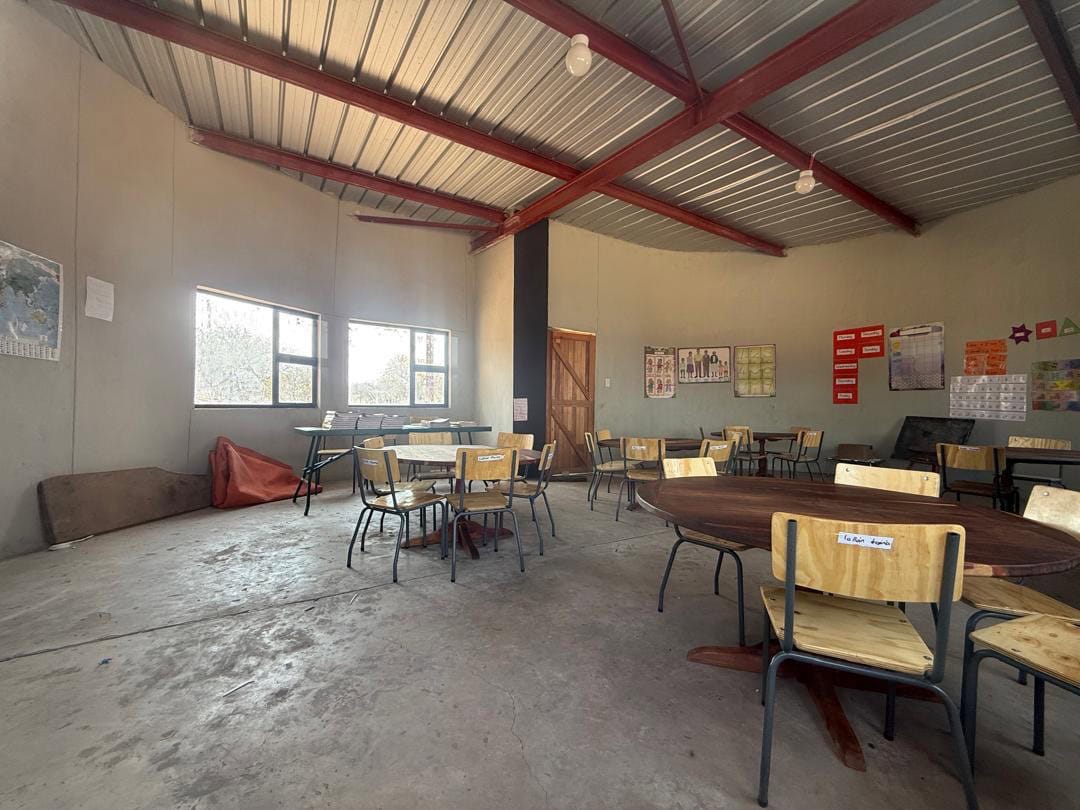
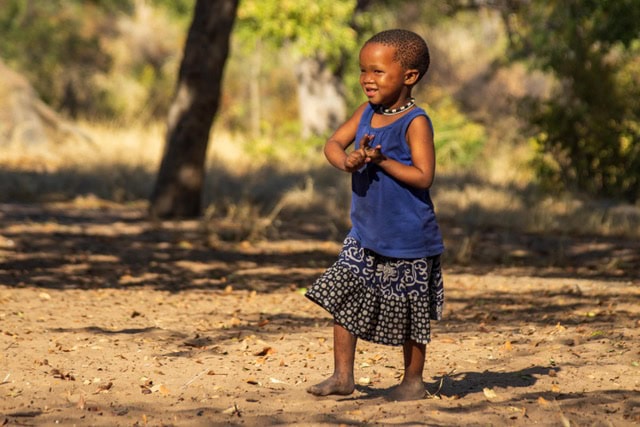
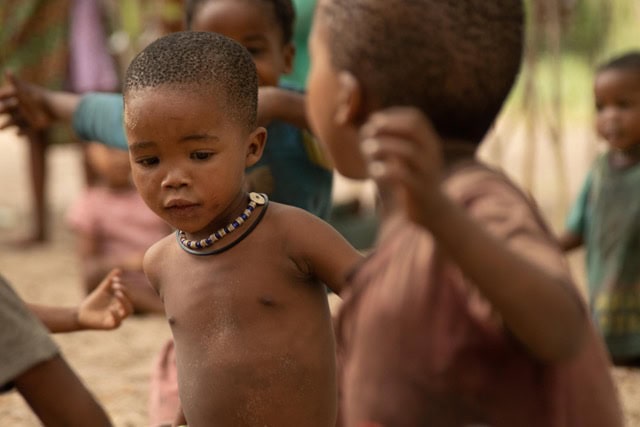
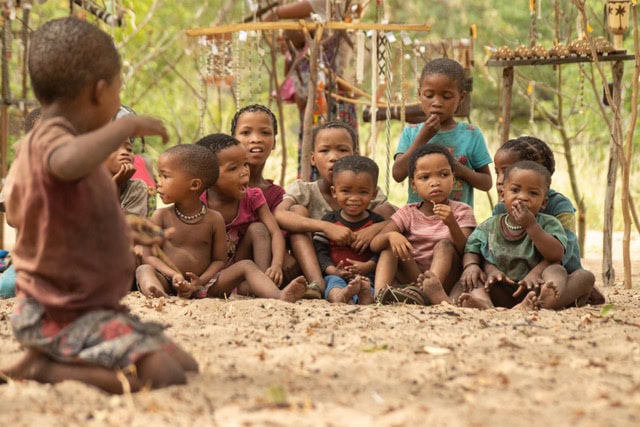
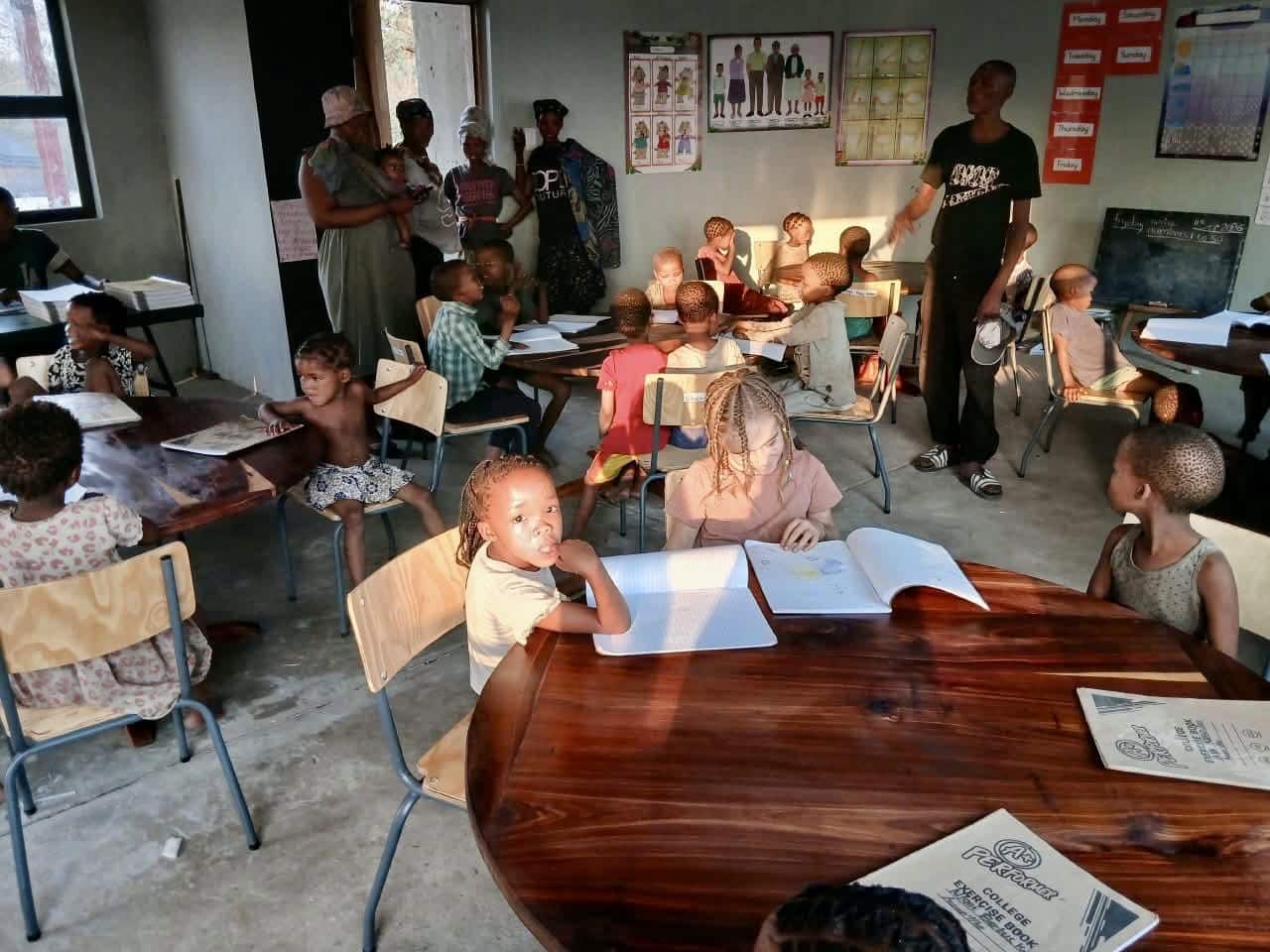
In 2021, the San of Nhoma asked for a school “that ensures an Indigenous transfer of knowledge that coincides with teaching western knowledge,” with both systems standing side by side. The school building is complete, and the curriculum includes the San language, hunting and gathering skills, and healing trance dance alongside contemporary subjects (TTF, Supporting San Bushmen Youth). There are approximately 25-30 children attending.
In 2025, when U.S. funding cuts abruptly ended education for many San children, we stepped up to keep the Nhoma school going..
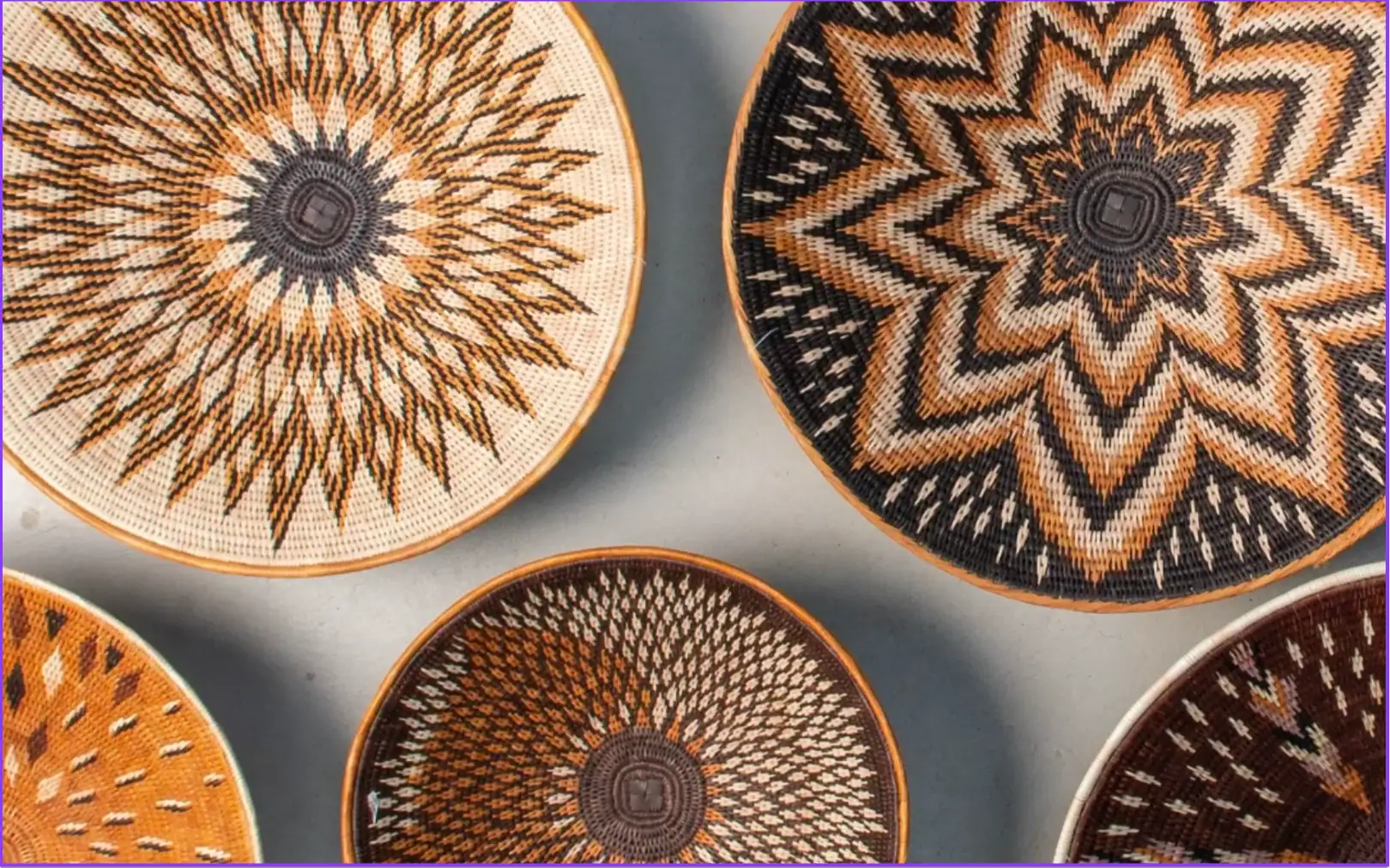
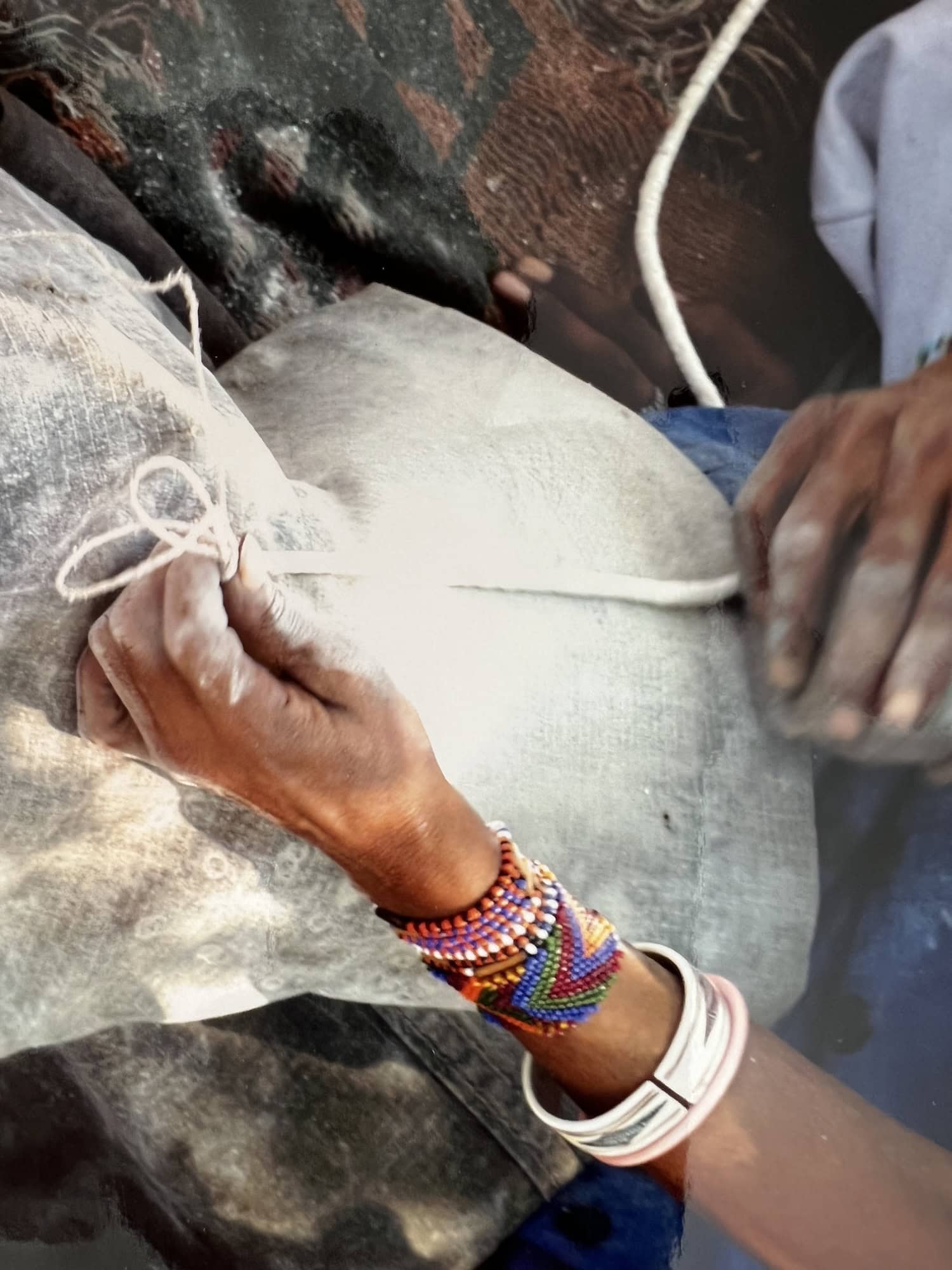
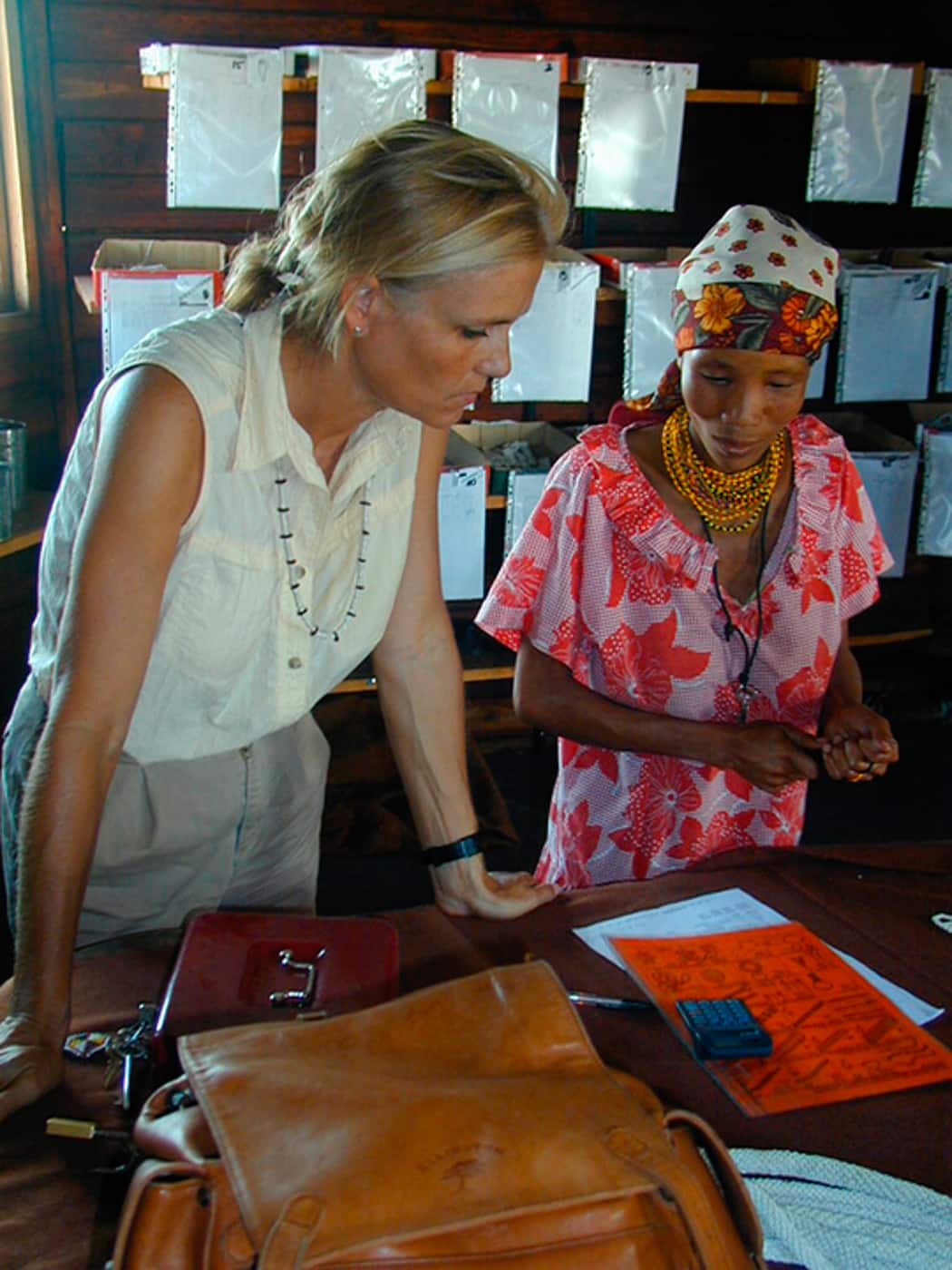
Encouraged sales of OMBA Arts Trust, a not-for-profit social enterprise that has been supporting the sustainable livelihoods of San artists, living in rural communities in Namibia.
Indigenous knowledge and Western knowledge, side by side — not one absorbed into the other.
Learn alongside our San partners in Namibia, then continue to iconic Botswana safari camps on a 10-night journey, with exclusive use of each camp and a private charter plane.